
Key Points
- Three main water heater types with different installation requirements: tankless (wall-mounted, complex venting), storage tank (most common, simpler install), and heat pump/hybrid (energy-efficient, needs space above 40°F) — choosing the right type for your Peoria home is the critical first decision.
- According to the U.S. Department of Energy, tankless water heaters can be 24–34% more energy-efficient than traditional storage tank heaters for homes using 41 gallons or less of hot water daily — a meaningful savings in Arizona’s year-round hot water demand.
- Always shut off power AND water supply before removing an old water heater — for gas units, also close the gas supply valve; skipping either step creates serious safety risks.
- Peoria’s hard water significantly accelerates sediment buildup in storage tank water heaters — annual tank flushing is especially important in Maricopa County, where water hardness regularly exceeds 200 mg/L.
- Proper venting is non-negotiable for gas water heaters — an undersized or blocked vent creates dangerous carbon monoxide buildup inside the home.
- If at any point you’re uncomfortable with a step — particularly gas line connections, electrical wiring, or lighting the pilot — stop and call a licensed plumber; water heater work involves gas, electricity, and high-pressure hot water simultaneously.
- Contact Desert Water Plumbing and Rooter for professional water heater installation and repair throughout Peoria, AZ.
So, you’ve decided to install a water heater on your own. Good for you! It’s not as challenging as you might think. From selecting the correct type of heater to the final ventilation checks, the process is straightforward if you follow the essential steps carefully. But remember, each step — whether safely removing the old heater or connecting the new one — has its own precautions. Don’t you want to know how these precautions can save you from a potential disaster?
Understand Your Water Heater Options
First, it’s essential to understand the three main types of water heaters: tankless, storage tank, and heat pump. Each type has unique characteristics and installation requirements.
Tankless water heaters heat water on demand, offering endless hot water supply and energy savings. You’ll mount these heaters directly to your wall — they’re compact and don’t take up much space. However, their installation can be complex due to the required ventilation system. Learn more about tankless water heater installation options from Desert Water.
Storage tank water heaters are the most common type, storing and preheating a set amount of water in a tank. When you turn on your hot water tap, it releases this preheated water. They’re relatively simple to install but can consume more energy due to heat loss in the tank.
Heat pump water heaters (also called hybrid heaters) are highly energy-efficient — these use electricity to move heat from the air or ground to heat water. They can be installed anywhere with sufficient space, but need an environment above 40°F to operate effectively. In Peoria’s warm climate, this is rarely a concern, making heat pump water heaters an increasingly popular choice for Arizona homeowners looking to reduce energy costs.
Which type is right for your Peoria home? For most Peoria households, the decision comes down to budget and hot water demand. Tankless units have a higher upfront cost but lower operating costs over time — ideal for smaller households or those focused on long-term savings. Storage tank units are more affordable upfront and simpler to install — the right choice for families with high simultaneous hot water demand. If you’re unsure, a plumbing inspection from Desert Water can help you evaluate your home’s specific needs before purchasing.
Gather Your Tools and Materials
Now that you’re familiar with the different types of water heaters, let’s gather the tools and materials you’ll need for installation:
- Adjustable wrench — versatile for tightening and loosening various fittings
- Pipe wrench — necessary for larger connections
- Plumber’s tape (Teflon tape) — creates watertight seals on threaded pipe connections
- Tube cutter — cuts copper pipes cleanly and precisely
- Multimeter — for checking the heater’s electrical connections and ensuring they function correctly
- Bucket — to drain the old heater before removal
- Safety gloves and safety glasses — protect your hands from cuts and eyes from debris
- New water heater — with the manufacturer’s installation instructions
Note on Peoria’s hard water: If you’re installing a storage tank water heater, consider having a water softener in place before installation. Maricopa County water is notoriously hard — high mineral content accelerates scale buildup inside the tank and on heating elements, reducing efficiency and shortening the unit’s lifespan. Addressing water hardness proactively extends the life of your new heater significantly.
Safely Remove the Old Water Heater
Before removing your old water heater, take the necessary safety precautions to prevent injuries and damage.
- Shut off power — for an electric heater, switch off the breaker at your main service panel; for a gas heater, turn off the gas supply valve
- Turn off the water supply — there’s a valve on the cold water pipe leading to the heater; twist it clockwise until fully closed
- Drain the tank — connect a garden hose to the drain valve near the tank’s bottom and run the other end to a suitable drainage area; open the drain valve and allow the tank to empty completely; use caution as the water may be very hot
- Disconnect the plumbing — once drained, disconnect the pipes connected to the water heater using two pipe wrenches — one to hold the pipe, the other to twist the connector
- Remove the old heater — water heaters are heavy; get help if needed; never attempt to move a full or partially full tank
What to do with the old unit: Many Peoria-area municipalities accept old water heaters at household hazardous waste collection events. Check with the City of Peoria or Maricopa County for current disposal options. Metal scrap yards also frequently accept old tank heaters.
Inspect the Installation Area
After safely removing the old water heater, thoroughly inspect the installation area before proceeding. A clean, safe work area is essential for both installation quality and long-term heater performance.
Check for the following:
- Floor condition — look for any water damage, rotting, or instability; a stable, dry base is essential for your water heater’s safe operation
- Mold or mildew — these could indicate a leak from the old heater and must be addressed before installing the new unit
- Adequate ventilation — especially critical if you’re installing a gas heater; inspect the existing vent and flue for blockages or damage
In Peoria’s desert climate, also check for: excessive dust accumulation in the installation area (common in Arizona utility closets and garages), which can restrict airflow around heat pump water heaters. Also verify the space temperature — heat pump units need ambient temperatures consistently above 40°F, which is easily met in most Peoria locations but worth confirming in unconditioned garages during winter months.
Connect the New Heater
Once the installation area is deemed safe and ready, connect your new water heater:
Temperature and pressure relief valve: Attach the discharge pipe to the T&P relief valve first. Use Teflon tape on the relief valve’s threads for a secure, watertight connection. This valve is a critical safety component — never cap or bypass it.
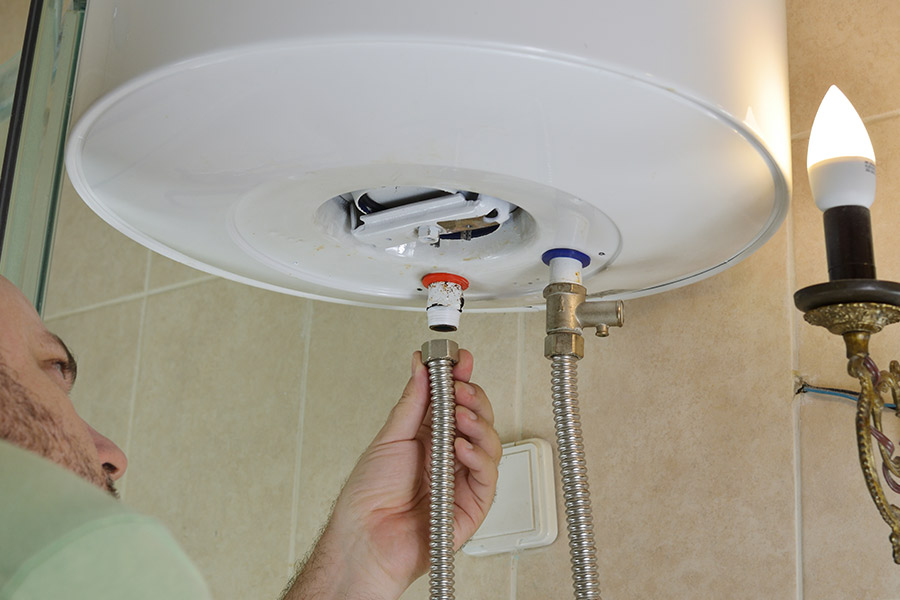
Water supply lines: Connect the hot and cold water supply lines using flexible copper connectors. Hot water lines connect to the heater’s outlet; cold water lines go to the inlet. Tighten these connections firmly — any loose connections lead to leaks.
Gas supply line (gas heaters only): Use a flexible gas supply line and apply pipe-joint compound to the flare fitting. If you smell gas at any point during or after this connection, stop immediately, ventilate the area, and call a professional. For water heater repair or gas line concerns, Desert Water’s licensed technicians are available throughout Peoria.
Electrical connections (electric heaters only): Connect the wires to the heater’s junction box following the manufacturer’s instructions exactly. Always verify power is off at the breaker before making any electrical connections.
Fill the tank before powering on: Always fill the tank completely with water before turning on gas or electricity. Running a tank heater dry damages the heating element and can permanently compromise the unit.
Proper Venting Techniques
Proper venting is not just a code compliance issue — it directly affects safety. A well-vented water heater prevents dangerous carbon monoxide buildup, which can be fatal.
Key venting steps:
- Inspect existing venting — check the existing vent and flue for damage or blockages; gases must flow freely out of your home
- Choose the right vent material — use Type B double-wall venting for gas water heaters; use PVC, CPVC, or ABS plastic vent pipes for power-vented or direct-vent models
- Proper vent sizing — the vent diameter must match the water heater’s vent outlet size; an undersized vent causes dangerous back-drafting
Arizona-specific note: Peoria’s high temperatures can affect outdoor vent termination locations. Ensure vent terminations are positioned away from AC units, windows, and air intake areas — and verify the outdoor vent cap is clear of debris, insect nests, and other obstructions common in desert environments.
Attach Water Supply Lines
With venting in place, attach the water supply lines:
- Cold water line — typically labeled blue or marked ‘C’; attach a flexible hose rated for hot water use; fasten securely without over-tightening
- Hot water line — typically labeled red or marked ‘H’; connect another flexible hose rated for hot water; tighten firmly but carefully
- Use Teflon tape — wrap it around the threads of the supply lines before attaching hoses to create a watertight seal
Double-check both connections after tightening — supply line connections are one of the most common sources of post-installation leaks.
Fill the Tank and Check for Leaks
Before powering up your water heater, fill the tank and check for leaks:
- Ensure all household faucets are turned off
- Slowly open the water supply valve to the heater and allow the tank to fill completely
- Listen for unusual sounds during filling — gurgling or hissing can indicate trapped air or a loose connection
Leak check locations:
- Supply line connections — look for any moisture or dripping at the connections you just made
- Tank base — feel around the bottom of the tank; any wetness indicates a leak
- Pressure relief valve — check for dripping or discharge; a leaking T&P valve is a serious safety concern requiring immediate attention
If you find a leak, turn off the water supply immediately and correct the issue before proceeding. If you’re uncomfortable diagnosing or fixing the leak, Desert Water Plumbing and Rooter provides professional leak detection throughout Peoria.
Light the Water Heater
Once you’ve confirmed no leaks, light your gas water heater:
- Locate the control knob on the side of the unit and turn it to the ‘Pilot’ setting
- Press down and hold the control knob
- Press the igniter button — you should hear a click and a small ‘whoosh’ as the pilot light ignites
- If there’s no igniter button, use a long lighter to manually light the pilot while holding the knob down
- If the flame doesn’t light, release the knob and wait several minutes before trying again — this allows any accumulated gas to dissipate safely
- Once lit, hold the knob down for about one minute to allow the thermocouple to heat up
- Slowly release the knob — if the pilot stays lit, turn the knob to ‘On’
Important: If you attempt to light the pilot more than twice without success, stop and call a professional. Repeated failed lighting attempts can indicate a faulty thermocouple, gas supply issue, or blocked pilot tube — all of which require professional diagnosis.
Post-Installation Maintenance Tips
With your water heater running, a few maintenance habits will protect your investment and maximize efficiency:
- Annual inspections — check for leaks, rust, or damage at least once a year; address any issues promptly before they escalate
- Flush the tank annually — sediment buildup forces your heater to work harder; in Peoria’s hard water environment, annual flushing is especially critical to maintain efficiency and prevent premature failure
- Test the pressure relief valve annually — lift the lever briefly to confirm the valve opens and releases water; a valve that doesn’t open or drips continuously needs replacement
- Consider a water softener — if you haven’t already, a water softener is one of the most impactful investments Peoria homeowners can make to extend water heater life and reduce maintenance frequency
Key Takeaways
Water heater installation in Peoria, AZ involves ten key steps: choosing the right type for your home (tankless, storage tank, or heat pump), gathering proper tools, safely draining and removing the old unit, inspecting the installation area, connecting the new heater with proper supply lines and relief valve, venting correctly for gas models, filling and leak-checking before powering on, lighting the pilot safely, and committing to annual maintenance. The DOE confirms tankless models are 24–34% more efficient for lower-usage homes — a meaningful savings in Arizona’s year-round hot water demand. Peoria’s hard water makes annual tank flushing and water softener installation especially important for storage tank owners. If any step feels beyond your comfort level — particularly gas line work, electrical connections, or pilot lighting — contact Desert Water Plumbing and Rooter for professional installation throughout Peoria, AZ.

When DIY Isn’t the Right Call — Desert Water Is Here to Help
You’ve successfully navigated the essential steps of water heater installation. Remember to maintain your heater regularly to maximize its efficiency and lifespan. But if the job feels bigger than expected — or if you’d simply rather have a licensed professional handle it from start to finish — Desert Water Plumbing and Rooter provides expert water heater repair and installation throughout Peoria and the surrounding Maricopa County area.