
Ever experienced the panic of a toilet on the brink of overflowing? You’re not alone. It’s a common household problem, but luckily, there are quick fixes you can try before calling in professional help. From mastering the shutoff valve to harnessing the power of a flange plunger, these methods might be your saving grace. What if the clog is too stubborn? Don’t worry; there are effective solutions for that, too. Stick around, and we’ll unravel these simple yet highly effective techniques that could save your day.
Understanding Toilet Overflow Mechanics
First, it’s essential to understand the basic mechanics causing your toilet to overflow, as this knowledge can aid in quick fixes and prevention. You’re dealing with a relatively simple system here. When you flush, water from the tank rushes into your toilet bowl via the overflow tube. If everything works as it should, the water in the bowl exits through the S-shaped trapway and onto your home’s sewage pipes.
But when something’s blocking that exit, you’ve got a problem. The water has nowhere to go but up and over the sides of the bowl, resulting in a messy overflow.
This blockage can occur for several reasons, often due to excess toilet paper or non-flushable items in the bowl. It could also be a problem further down the line, such as tree roots intruding into your sewage pipes.
Sometimes, the issue isn’t a blockage at all. It might be that the water level in your tank is set too high. Too much water is released when you flush, causing an overflow even without a blockage.
Equip Yourself With Necessary Tools
So, what tools do you need to tackle a toilet overflow? Having the right weapons in your arsenal is half the battle won; let’s break it down.
Firstly, you’ll need a good-quality plunger. It’s your first line of defense against clogs. Choose one with a flange; it offers superior suction and force. Next, a plumber’s snake or a hand auger is essential. It can reach deep into the toilet to remove stubborn blockages.
You’ll also need a pair of rubber gloves. These are not just for hygiene but also to protect your hands from the force exerted while using tools. Don’t overlook a bucket and mop. They’re your clean-up crew to handle any water that does escape.
A wrench is another handy tool. It shuts off the toilet’s water supply in case of severe overflow. Additionally, towels and rags should be kept ready for minor spills and create a barrier to prevent water from spreading to other areas.
Lastly, a torch or headlamp can provide better visibility, especially in less-lit areas.
Preparedness is key. Equip yourself with these tools, and you’ll be well on your way to tackling any toilet overflow issue.
Initial Steps to Stop Overflow
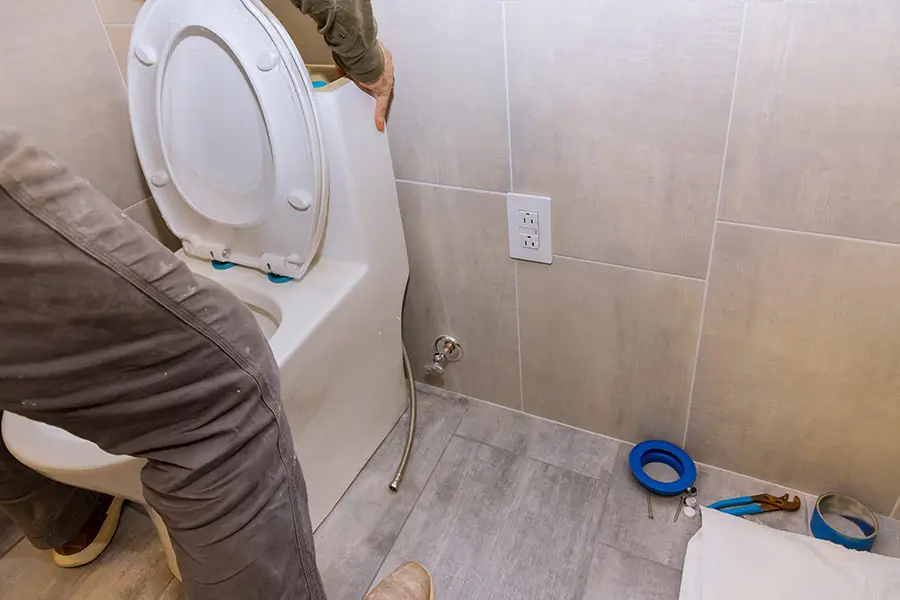
Once you’ve gathered your tools, it’s time to tackle the overflow head-on by immediately stopping the water flow. Your first task is to locate the water shutoff valve behind the toilet. It usually has a football-shaped handle and is situated close to the floor. Swiftly yet gently turn it clockwise until it’s tight. This will stop the water from gushing into the bowl.
If you can’t locate or access the valve, don’t panic. Lift the toilet tank lid and locate the float ball or float device. The component rises with the water level when the tank fills. Push it upward to stop the water flow. If this doesn’t work, you can lift the flapper valve at the bottom of the tank. Be careful not to damage these parts as you maneuver them.
Unclog the Toilet With a Plunger
Armed with your trusty plunger, you’re ready to tackle the clog causing the toilet to overflow. Before you get started, it’s essential that you have the right kind of plunger. What you need is a flange plunger specially designed for toilets. Its extra ring of rubber—the flange—goes inside the drain, creating a better seal for more effective plunging.
To get started, insert the plunger into the bowl and tilt it to let air escape from beneath. This is key because you want water to force the clog away, not air. Once the plunger is submerged, place the flange directly over the drain hole and push down firmly yet slowly to create a seal. Next, pull up sharply but submerge the plunger’s head to maintain the vacuum effect.
Now, it’s time to plunge. Push down and pull up vigorously about 15-20 times. This should ideally dislodge the clog. Repeat the process if necessary. Once the water drains, flush the toilet to clear the clog completely. Remember, you’re serving your home and the community by preventing potential sewer problems.
Using a Toilet Auger for Tougher Clogs
If your plunger isn’t up to the task and the toilet is still not draining correctly, it’s time to bring in the heavy artillery: a toilet auger. This handy tool is designed specifically for loosening stubborn clogs that a plunger can’t handle. It’s essential to use it correctly to avoid damaging the porcelain.
Start by positioning the auger’s head into the toilet bowl and aiming it towards the back. Then, slowly turn the handle clockwise while gently pushing. This action helps the coiled snake into the drain, breaking up the clog.
When you feel resistance, that’s a good sign. It means you’ve reached the clog. Keep turning the handle to break it up. Once you feel the resistance lessen, you’ve likely conquered the clog. Pull the auger out, flush the toilet, and see if it’s draining better.
If it’s still slow, don’t despair. You may need to repeat the process to clear the blockage fully. Remember, patience is key when it comes to using a toilet auger. It’s a powerful tool, but getting results takes a gentle, determined touch.
Incorporating Natural Drain Cleaners
Now, let’s explore how to incorporate natural drain cleaners into your toilet unclogging routine for a more eco-friendly approach. When your toilet overflows, you may instinctively reach for a chemical cleaner. However, these products can harm the environment and even your plumbing system.
Firstly, consider using a homemade solution of baking soda and vinegar. Start by pouring half a cup of baking soda into the toilet bowl, followed by half a cup of vinegar. Wait 15-20 minutes for the mixture to work its magic. This simple but powerful combo creates a fizzing action that can effectively break up the clog.
Another natural solution is hot water mixed with dish soap. The soap acts as a lubricant to help slide the clog down the pipe, while the hot water helps to dissolve it. Pour a half cup of dish soap into the bowl, then carefully add a gallon of hot water (not boiling). Let it sit for a few minutes before attempting to flush.
Chemical Products for Toilet Overflow
While natural solutions are gentler, there are times when you’ll need the power of chemical products to handle stubborn toilet overflow issues. Chemical products designed for toilet overflow have a stronger action and can dissolve most clogs causing the overflow.
One standard product is a chemical drain opener. These products contain potent ingredients that can break down the toughest clogs. When you’re dealing with serious blockages, you’ll want to consider using a product like this. Just be sure to follow the instructions on the packaging closely. Incorrect use can lead to damage to your plumbing or even personal injury.
Another option is enzyme-based products. These use biological agents to eat away at the clog without damaging your pipes. They’re slower-acting but a good option if you’re dealing with a persistent issue.
Lastly, remember that safety is paramount when using chemical products. Always wear protective gloves and eyewear, and make sure the area is well-ventilated. It’s also important not to mix different chemical products, as this can lead to dangerous reactions.
Preventive Measures to Avoid Overflow
To avoid the hassle of an overflowing toilet, consider taking proactive steps to guarantee your plumbing stays clog-free. Start by being mindful of what you flush. Only human waste and toilet paper should be sent down the toilet. Diapers, paper towels, or cotton swabs can easily block the pipes and cause an overflow.
Next, regular cleaning is essential. A good scrubbing can prevent the build-up of minerals and toilet paper that can lead to clogs. Also, pour hot water down the toilet once a week to help dissolve potential blockages.
Then, consider investing in a high-quality plunger. It’s a small investment that can save you a lot of trouble in the long run. Ensure you know how to use it effectively; a good plunge can often dislodge a clog before it becomes a bigger issue.
Signs You Should Call a Plumber
Even if you’ve taken all the preventive measures, there might come a time when you’ll need to call in a professional plumber, and it’s essential to recognize the signs. Persistent clogging, for instance, is a telltale sign that something is wrong. If your toilet frequently overflows or requires multiple flushes, this may indicate a deeper problem that requires professional attention.
Similarly, if you notice unusual noises or gurgling sounds from your toilet, don’t ignore them. It’s not just a matter of annoyance; these sounds can indicate severe issues like blockages or faulty hardware. A plumber can diagnose and fix these issues before they escalate into major problems.
Water around the base of your toilet is another red flag. This could suggest a leak in the seal between the toilet and the floor, which can lead to severe water damage over time. You should not try to fix it yourself; call a plumber to guarantee it’s done correctly.
Lastly, if you can’t identify the cause of the problem yourself, don’t hesitate to ask for help. A professional plumber has the expertise and tools to handle complex plumbing issues and can save you time, money, and stress in the long run.
Regular Maintenance for a Healthy Toilet
Regular maintenance of your toilet can extend its lifespan, prevent costly repairs, and guarantee it functions at peak performance at all times. Cleaning the exterior for aesthetic purposes is not enough; you should also pay attention to the internal workings. It can be a simple yet significant service to your household or community, ensuring a clean, hygienic, operational facility.
Start by inspecting the toilet’s parts. Check the fill valve for any signs of wear or damage. If it’s constantly running, it might need replacement. The flapper, which controls the water released from the tank, should also be regularly inspected and replaced when worn.
Don’t neglect the toilet’s water level too. When it’s too high, it can cause overflow. Conversely, the toilet might not flush correctly when it’s too low. You can adjust the water level by turning the adjustment screw on the fill valve.
Moreover, using a toilet plunger can help maintain a clear passageway and prevent potential clogs. It’s also advisable to flush only toilet paper and bodily waste. Other items can cause blockage and damage to the toilet’s plumbing system.

Conclusion
Remember, 85% of toilet clogs are easily fixable without a plumber. So, don’t fret when your toilet overflows. With the right tools and techniques, you can tackle the problem head-on. Regular maintenance and vigilance are key. Don’t hesitate to call a professional if you’re dealing with stubborn clogs or frequent overflows. After all, keeping your toilet running smoothly is not just about convenience; it’s about preserving the health of your home’s plumbing system.
Frequently Asked Questions
Can I Use Household Items to Create a Makeshift Plunger?
You can! A wire coat hanger or a plastic bottle can be a temporary solution. But remember, they’re not as effective as an actual plunger. It’s always best to have the right tools.
What Are Common Health Risks Associated With Toilet Overflow?
When your toilet overflows, you’re exposed to harmful bacteria and viruses. This can lead to illnesses like Hepatitis A, E. coli, and Giardia. Always ensure you wear gloves and clean thoroughly to reduce your risk.
Can I install an overflow prevention device in my toilet?
Yes, you can install an overflow prevention device on your toilet. It’s a practical solution to prevent water damage. You’ll need to follow specific instructions, but it’s a task you can handle with some patience.
Can a Constantly Running Toilet Lead to an Overflow?
Yes, a constantly running toilet can lead to an overflow. A malfunction in the fill valve causes it. You must fix it quickly to prevent water wastage and potential flooding.
How Long Does It Take for a Professional Plumber to Fix an Overflow?
It generally takes a pro plumber about 1-3 hours to fix an overflow. They’ll diagnose the issue, provide a solution, and guarantee everything’s working correctly. Remember, their expertise saves you time and future headaches.